


Understanding Alzheimer’s Beyond Forgetfulness
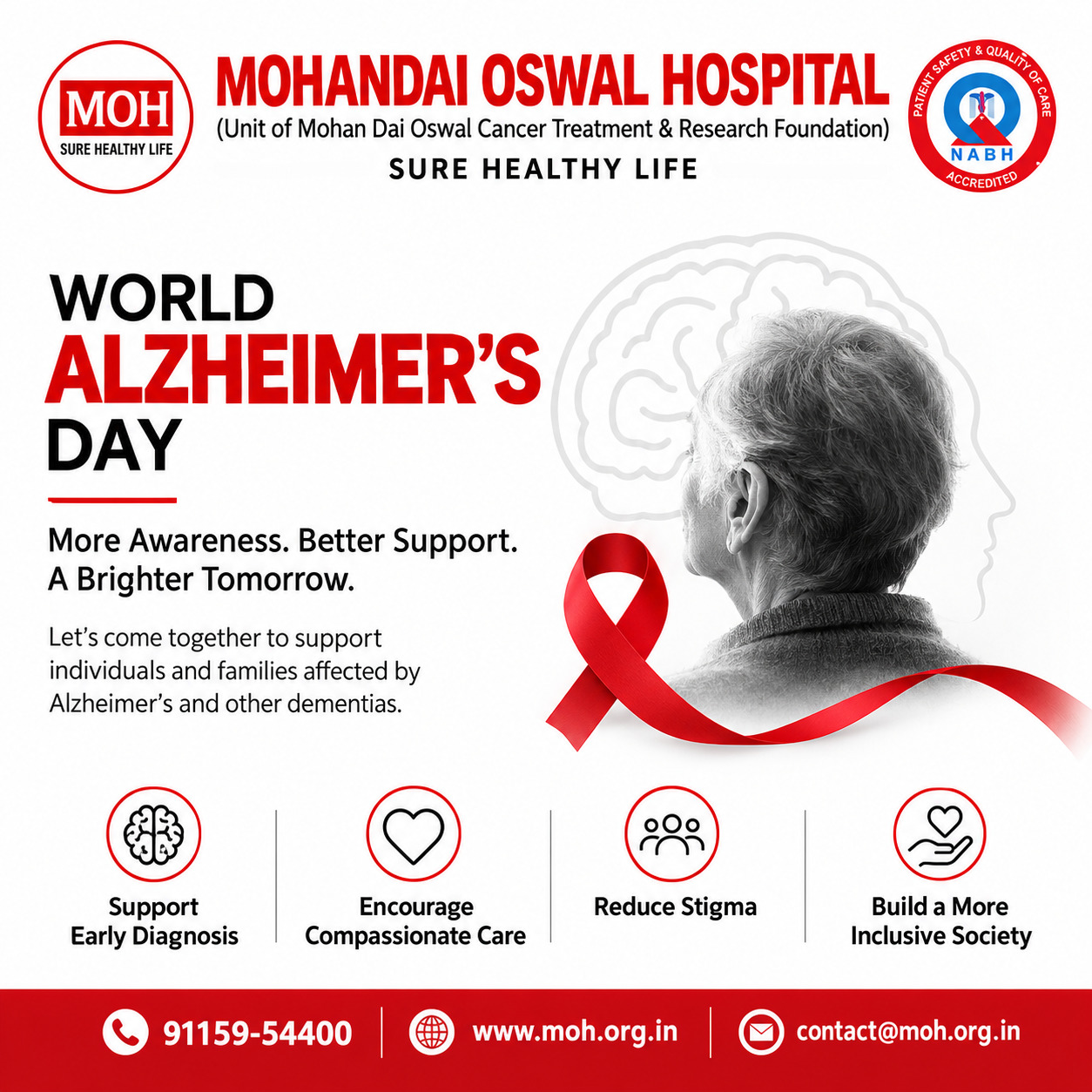
When Memories Begin to Fade: Understanding Alzheimer’s
Beyond Forgetfulness
“I know
her face… but why can’t I remember her name?”
For most families, it may begin with
something small.
A forgotten phone.
The same question asked twice.
A name that suddenly refuses to come to mind.
A familiar route that no longer feels familiar.
At first, everyone laughs it off.
“It’s just
age.”
But what happens when these little
moments become more frequent? When yesterday’s conversation disappears from
memory, but a story from 30 years ago is remembered perfectly? When someone
begins forgetting things they once did effortlessly?
This is where awareness matters.
Observed every year on 21
September, World Alzheimer’s Day reminds us that Alzheimer’s disease is not
simply about forgetting. It is about how changes in the brain can gradually
affect memory, thinking, communication, behaviour, and everyday life.
And sometimes, recognising the
difference between normal ageing and a warning sign can be the first
step towards getting the right help.
More
Than Just Forgetting
We all forget things.
You may walk into a room and forget
why you went there. You may misplace your glasses or struggle to remember
someone's name. These things happen.
Alzheimer’s-related memory loss can
be different.
A person may forget a conversation
that happened earlier the same day. They may repeatedly ask the same question
without remembering that it was already answered. They may forget important
dates or increasingly depend on family members to remember things for them.
The change is not necessarily one
forgotten memory.
It is a
pattern that begins to interfere with everyday life.
When
Familiar Things Start Feeling Unfamiliar
Imagine someone who has cooked the
same dishes for decades suddenly struggling to follow a familiar recipe.
Someone who has driven the same
route for years becoming confused about where they are.
Someone who has always managed
household finances finding it difficult to pay bills or keep track of expenses.
These changes can be unsettling — for
the person experiencing them and for the family watching them happen.
And this is why persistent changes
in memory and thinking should not simply be dismissed as “getting old.”
7
Signs That Deserve Attention
Alzheimer’s can develop gradually,
which means the earliest signs may be easy to overlook.
Here are some changes families
should pay attention to:
1.
Forgetting Recently Learned Information
Old memories may remain surprisingly
clear while new information becomes difficult to retain.
A person might forget a conversation
from the morning but vividly remember something that happened decades ago.
2.
Repeating Questions or Stories
Asking the same question repeatedly
or telling the same story several times may indicate that new information is
not being remembered properly.
3.
Difficulty With Familiar Tasks
Tasks that were once automatic can
suddenly become confusing — cooking, handling money, using household
appliances, or following a familiar routine.
4.
Getting Lost in Familiar Places
Someone may have difficulty
remembering a familiar route or become confused about where they are, even in
places they have known for years.
5.
Struggling to Find the Right Words
A person may know what they want to
say but repeatedly struggle to find simple or familiar words, making
conversations increasingly difficult.
6.
Changes in Mood or Personality
Memory problems may be accompanied
by anxiety, irritability, withdrawal, confusion, or changes in a person's usual
behaviour.
7.
Losing the Ability to Manage Everyday Decisions
Difficulty managing finances,
medications, appointments, or other routine responsibilities can sometimes
accompany cognitive decline.
But
Does Forgetfulness Always Mean Alzheimer’s?
No.
And this is an important part of the
conversation.
Memory problems can have several
possible causes. Certain medications, nutritional deficiencies, sleep problems,
depression, stress, and other medical or neurological conditions may also
affect memory and concentration.
That is why diagnosing yourself — or
a loved one — based on a few symptoms is not the answer.
A proper
medical evaluation is.
A neurologist can assess the
person's symptoms, medical history, medications, cognitive changes, and other
relevant factors to understand what may be happening.
Alzheimer’s
Doesn't Erase a Person’s Story
Perhaps one of the most difficult
things about Alzheimer’s is watching someone struggle with memories that once
seemed permanent.
The person who remembers everyone's
birthday may forget yours.
The person who always knew exactly
where everything belonged may begin misplacing things.
The person who spent years telling
family stories may slowly struggle to remember the details.
But behind the symptoms is still a
person with a lifetime of experiences, relationships, emotions, and memories.
That is why Alzheimer’s care is not
only about medical treatment.
It is also
about dignity, patience, understanding, and human connection.
What
Can Families Do?
If you notice a persistent change in
a loved one's memory or behaviour, don't immediately panic — but don't ignore
it either.
Start with a conversation.
Observe whether the changes are
becoming more frequent. Note situations where the person is struggling.
Encourage them to speak with a healthcare professional.
And once a diagnosis is made, remember
that the journey involves the family too.
Simple things can matter:
- Keep daily routines familiar.
- Communicate calmly and clearly.
- Give the person time to
respond.
- Avoid unnecessary arguments
over forgotten information.
- Create a safe and supportive
environment.
- Keep regular medical
appointments.
- Take care of the caregiver as
well.
Because caring for someone with
Alzheimer’s can be challenging, and caregivers need support too.
There
Is a Difference Between Forgetting a Name and Forgetting What the Name Means
That difference is worth noticing.
Forgetting someone's name
occasionally is normal.
Forgetting who that person is, why
they are familiar, or how they fit into your life may be something that
deserves medical attention.
The goal isn't to turn every forgotten
moment into a medical concern.
The goal
is to recognise when forgetfulness becomes a pattern.
World
Alzheimer’s Day: Let’s Talk About the Signs
Alzheimer’s is often discussed only
after it has significantly affected a family. But awareness should begin much
earlier.
This World Alzheimer’s Day,
take a moment to notice the small changes in the people you love.
Listen when someone says, “Something
doesn't feel right.”
Don't automatically blame every
memory lapse on age.
And don't be afraid to seek medical
advice.
At Mohandai Oswal Hospital,
Ludhiana, patients experiencing neurological and cognitive concerns can
receive medical evaluation and guidance from experienced specialists. With
modern facilities and a patient-focused approach, the hospital aims to support
patients and their families through their neurological healthcare journey.
Because
sometimes, the first sign isn't a forgotten memory.
It is a
change in the way someone remembers their world.
And noticing that change can be the
beginning of getting the right support.

From Pain to Progress: Understanding the Role of Physiotherapy
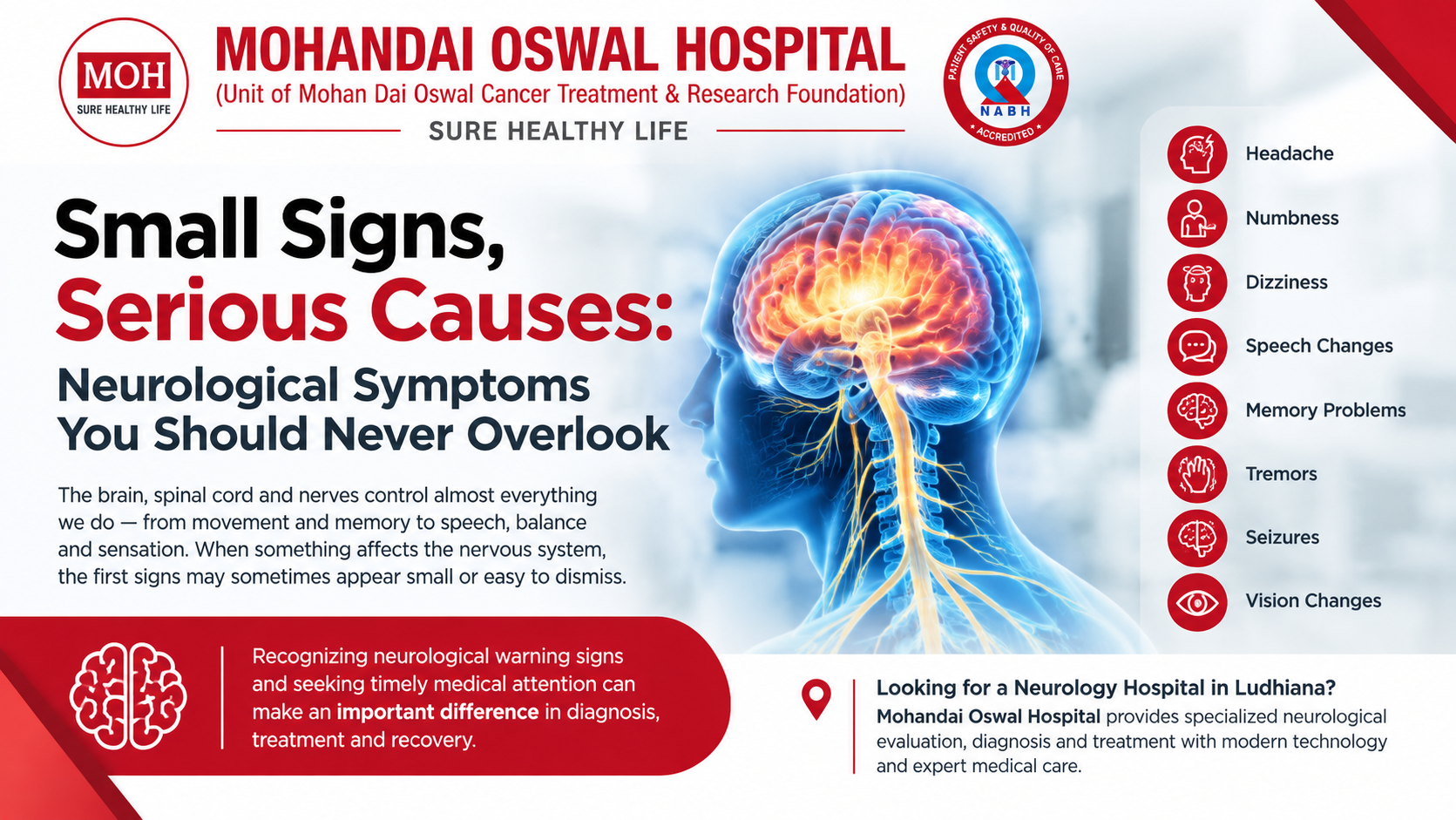
Neurological Symptoms
Understanding Mental Health: Why Taking Care of Your Mind Matters

Laparoscopic Surgery: What Is It and How Does It Work?

Women’s health needs change at every stage of life. From the beginning of menstruation to pregnancy, motherhood, and menopause, women may experience...
.png)